How to Turn Off Google Reviews: Attorney-Led Removal
How to Turn Off Google Reviews: Attorney-Led Removal
Attorney-led removal can get specific defamatory or policy-violating Google reviews taken down in many cases. What it cannot do is globally disable reviews on your Business Profile so no one can leave them. That distinction matters for every local business owner who has searched “can you turn off Google reviews” after finding a damaging post. The practical path forward is targeted removal of individual reviews that meet legal or platform-policy thresholds, and Repvive’s pay-per-removal, attorney-led service is built exactly for that.
Key Takeaways
Attorney-led removal is the most reliable path for defamatory or policy-violating Google reviews, but it cannot disable reviews globally and it does not apply to honest negative feedback.
| Point | Details |
|---|---|
| Removal is targeted, not global | Attorneys remove specific reviews that meet legal or policy thresholds; no process disables reviews entirely. |
| Preserve evidence immediately | Screenshots, transaction logs, and reviewer profile pages are required before any legal action can proceed. |
| Platform reporting comes first | Google’s Reviews Management Tool resolves many violations at low cost before litigation is needed. |
| Weigh Streisand effect risk | Public litigation can amplify a review’s visibility; assess whether escalation is proportionate. |
| Repvive’s pay-per-removal model | Repvive reports 95% success on Google removals with no upfront fees, billing only after confirmed takedown. |
Table of Contents
- Can you turn off Google reviews by removing specific ones?
- Three immediate steps to take before calling an attorney
- How attorney-led removal actually works
- What does attorney-led removal cost, and what are the risks?
- What to prepare before you hire an attorney
- How Repvive’s attorney-led removal service works
- How to reduce your exposure to future harmful reviews
- What realistic outcomes actually look like
- Repvive handles the legal work so you don’t have to
- Sources
- FAQ
Can you turn off Google reviews by removing specific ones?
Not every negative review qualifies for removal. The law and Google’s own policies draw a clear line between content that can be taken down and content that stays up because it reflects a genuine customer experience.
What makes a review legally actionable:
- Defamation requires a false statement of fact (not opinion), published to a third party, that causes real harm. A review claiming your dental practice committed Medicaid fraud is potentially actionable. A review saying “worst experience of my life” is protected opinion.
- Fake or competitor-posted reviews can trigger defamation claims and, when a business competitor posts them, the Lanham Act as well. The legal theory must match the platform pathway for removal to move quickly.
- Platform policy violations Google removes include spam, impersonation, profanity, sexual content, personal information, and coordinated review-bombing. These categories don’t require litigation; they require documentation.
What stays up:
Honest negative feedback is protected by the First Amendment and the Consumer Review Fairness Act, which prohibits businesses from contractually silencing customers. Attempting to remove legitimate criticism risks triggering the Streisand effect and potential anti-SLAPP liability.
Section 230 and platform immunity: Google is not liable for third-party review content under Section 230 of the Communications Decency Act. You sue the reviewer, not Google. Google’s role is to comply with a valid court order or to act on its own policy violations when properly reported.
When courts weigh whether to unmask an anonymous reviewer, they apply the Dendrite or Cahill tests, which require the plaintiff to make a prima facie showing of a valid claim before a subpoena issues. Courts apply heightened standards and the process is legally complex rather than automatic.
Three immediate steps to take before calling an attorney
Time destroys evidence. These three steps protect your legal options before anything else.
1. Preserve everything now. Take timestamped screenshots of the review, the reviewer’s profile page, and the full URL. Pull internal records that contradict the review’s claims: transaction logs, appointment records, staff schedules, and any communications with the reviewer. Courts and attorneys need this documentation to build a prima facie case.

2. Report through Google’s official channel. Use the Reviews Management Tool to flag reviews that violate Google’s content policies. Google evaluates flagged content and may remove it. If a flagged review is not removed, a one-time appeal is available. This step costs nothing and sometimes resolves the problem within days when the policy violation is clear.
3. Stay quiet publicly. Don’t respond to the review with threats or accusations. Don’t post about the situation on social media. Anything you say publicly can be used against you in court and can hand the reviewer a narrative advantage.
Pro Tip: Before you engage counsel, run a free Google Business Profile audit to identify all flagged content and confirm your account ownership and manager access are current. Attorneys need that access on day one.
How attorney-led removal actually works
The workflow follows a logical sequence, and understanding it helps you set realistic expectations.
- Investigation and triage. An attorney reviews the content, checks whether the poster is a real customer, and determines whether the review is false, policy-violating, or both. This triage step determines which legal theory and platform pathway to pursue.
- Cease-and-desist or platform escalation. Many cases resolve here. A demand letter to an identified poster, or a well-documented escalation through Google’s direct channels, produces voluntary removal without litigation.
- John Doe lawsuit and subpoena. When the poster is anonymous and the review is demonstrably false, an attorney files a John Doe suit to obtain a subpoena compelling Google to disclose the poster’s account data. Courts apply the Dendrite or Cahill test: the plaintiff must show a prima facie defamation case before disclosure is ordered.
- Court order for removal. If Google won’t remove the content voluntarily, a court order compels it. That order must include the exact URL of the review, the verbatim offending text, and narrowly scoped relief. Vague orders fail; precision is what gets Google to act.
- Post-removal monitoring. Once removed, the attorney confirms takedown and documents it. Repvive’s dashboard updates in real time so you can verify the result yourself.
Realistic timelines: platform escalation resolves in days to a few weeks; a demand letter to an identified poster takes two to six weeks; a John Doe subpoena adds two to six months; full litigation can run six months to two years.
What does attorney-led removal cost, and what are the risks?
Cost models
| Path | Typical cost shape | Best for |
|---|---|---|
| Platform escalation | Low or no cost | Clear policy violations with documentation |
| Pay-per-removal service | Fee per successfully removed review | Owners who want no upfront risk |
| Demand letter | Flat or hourly attorney fee | Identified posters, pre-litigation |
| John Doe subpoena | Hourly litigation costs | Anonymous posters, strong defamation case |
| Full litigation | Significant hourly fees | High-damage cases with clear evidence |
For a detailed breakdown of what local businesses pay at each stage, Repvive’s Google review removal cost guide covers current pricing shapes.
Risks to weigh
Streisand effect: Filing a lawsuit or sending a public demand can draw media attention to the very review you want buried. Assess whether the review’s current visibility justifies the risk of amplifying it.
Anti-SLAPP exposure: Many U.S. states have anti-SLAPP statutes that let defendants recover attorney fees if a removal lawsuit is found to target protected speech. California, Texas, and New York all have active anti-SLAPP laws.
Section 230 ceiling: Even a valid court order doesn’t guarantee removal if it’s drafted imprecisely. Google has declined to act on orders that lack the exact URL and verbatim text.
Platform policy reporting is the right first channel for most removable reviews because it is low-cost and frequently resolves cases within days when documentary proof aligns with policy violations.
What to prepare before you hire an attorney
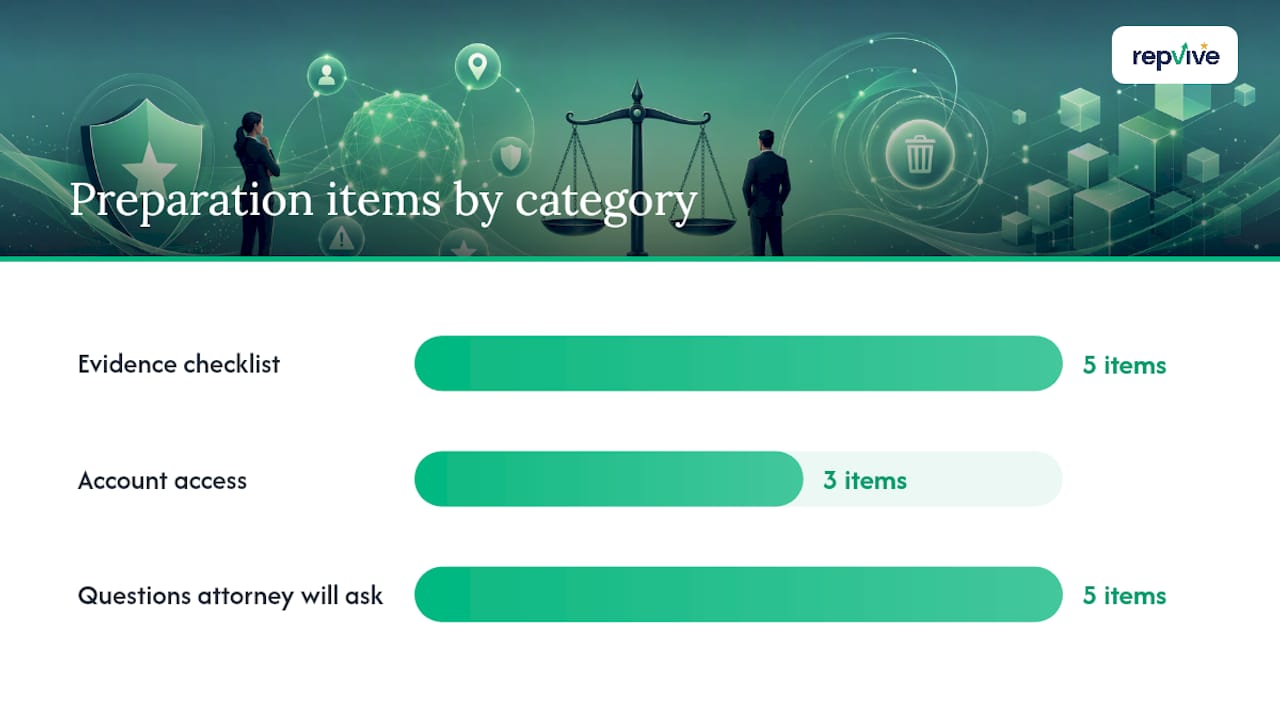
Attorneys bill by the hour. Arriving organized cuts your costs and speeds the case.
Evidence checklist:
- Screenshots with visible timestamps and full-page URLs
- Transaction records, invoices, or appointment logs that contradict the review’s claims
- Staff schedules or CCTV logs for the date the reviewer claims to have visited
- Any direct communications with the reviewer (email, text, voicemail)
- Records of prior similar reviews that suggest a coordinated campaign
Account access:
- Verified Business Profile ownership and current manager email addresses
- Reviews Management Tool history showing prior flags and Google’s responses
- Any prior correspondence with Google support
Questions your attorney will ask:
- Do you recognize the reviewer? Have you had any prior contact?
- Could a former employee, competitor, or disgruntled vendor have posted this?
- Have you seen a pattern of reviews appearing in a short window, suggesting coordination?
- Have you responded publicly to this review already?
How Repvive’s attorney-led removal service works
Repvive’s process is built around one principle: you pay only when a review is successfully removed.
Repvive reports a 95% success rate on Google review removals and a 99% overall removal success rate across platforms, with no upfront fees charged until a removal is confirmed.
The workflow runs from intake through a real-time tracking dashboard:
- Intake and investigation: Repvive’s legal team reviews the content, checks policy violations, and determines the strongest removal pathway.
- Customized legal claim: Attorneys draft a customized claim specific to that review, not a template. This is what separates attorney-led removal from generic flagging.
- Direct takedown channels: Repvive uses direct channels with Google, which accelerates the process compared to standard consumer flagging.
- John Doe if needed: For anonymous posters where the review is demonstrably false, the legal team pursues subpoena-based unmasking.
- Billing after removal: The client is charged per successfully removed review. No removal, no charge.
Pro Tip: Repvive’s RepWatch monitoring tool alerts you when new reviews appear so you can triage them immediately, before a damaging post gains visibility or review count.
How to reduce your exposure to future harmful reviews
Reactive removal is expensive. Proactive monitoring and policy-compliant review generation are cheaper.
- Set daily alerts using Google Business Profile notifications and a monitoring tool like RepWatch so no review goes unread for more than 24 hours.
- Triage every incoming review for policy violations before deciding whether to respond or escalate. A review containing personal information or profanity goes to your attorney or removal service; a genuine complaint gets a professional response.
- Solicit reviews compliantly. Google’s Maps content policies prohibit incentivized reviews and posting on competitors’ behalf. Ask customers for honest feedback after a completed service, train staff on the request, and never offer discounts or gifts in exchange.
- Control internal access. Limit who can manage your Business Profile. A disgruntled former employee with manager access can cause significant damage.
- Set an escalation threshold. Define internally when a review goes straight to legal review (e.g., any review alleging criminal conduct, fraud, or malpractice) rather than waiting to see if it resolves on its own.
What realistic outcomes actually look like
Most business owners who search “turn off Google reviews” are reacting to one or two specific posts that feel devastating. The good news: those targeted reviews are often the most removable kind, especially when they contain false factual claims or clear policy violations. The harder truth is that the legal process takes longer and costs more than most owners expect, and pursuing litigation over a borderline review can backfire badly.
The cases that resolve fastest are the ones where the evidence package is clean: a review claiming something that transaction records directly contradict, posted by someone who never appears in your customer database. If that describes your situation, preserve the evidence today and get a legal assessment before the review gains more traction.
Repvive handles the legal work so you don’t have to
If you’ve read this far, you likely have a specific review in mind. Repvive’s attorney-led team evaluates whether that review meets the threshold for removal, builds the customized legal claim, and pursues takedown through direct channels with Google. You pay nothing until the review is gone.
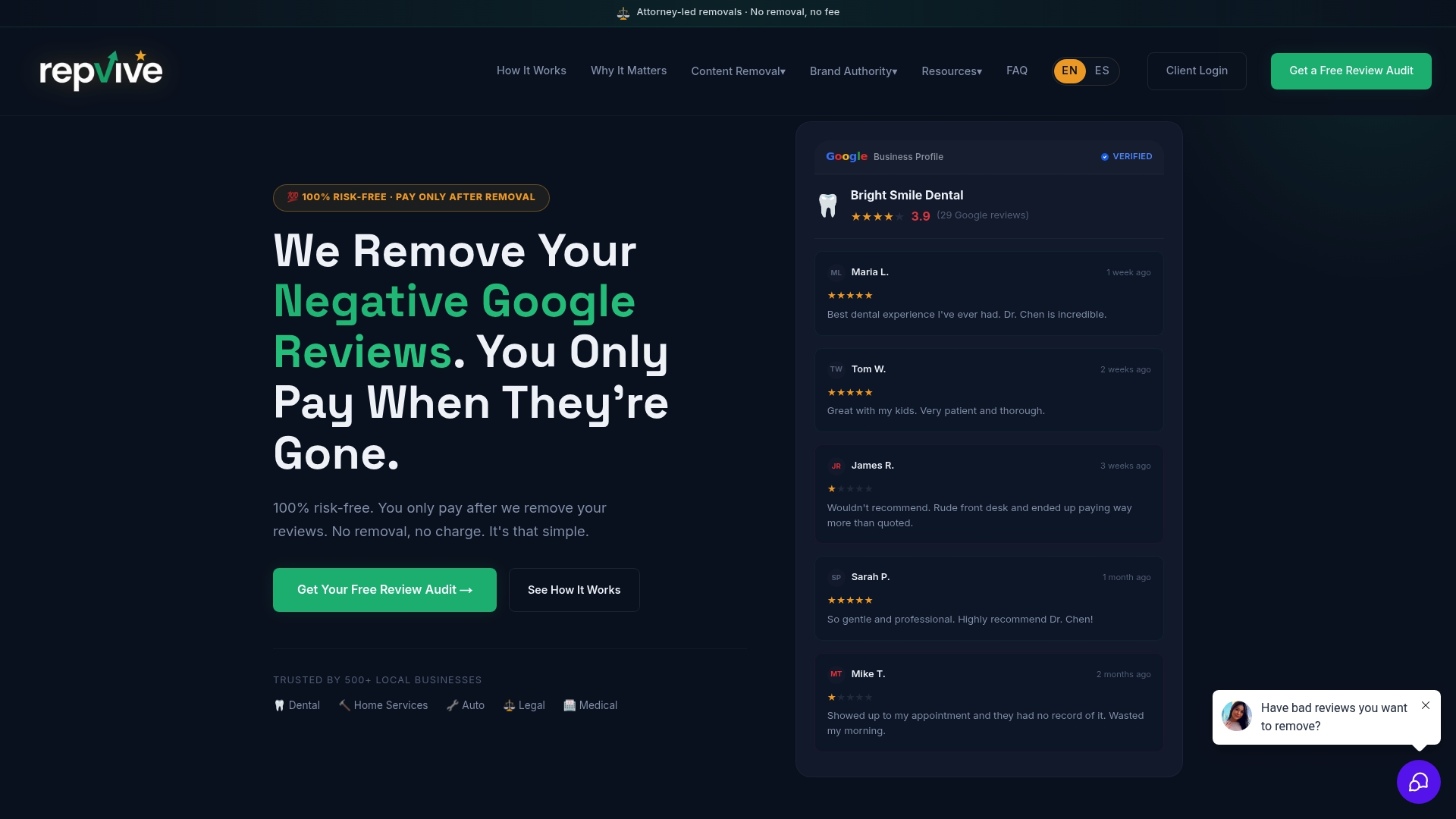
Repvive’s review removal service covers Google, Yelp, Facebook, TripAdvisor, Trustpilot, the BBB, and more than 20 other platforms. For business owners who want attorney-led results without a retainer or hourly billing, this is the direct path. Submit your review for a free evaluation at Repvive.
This article is general information, not a substitute for advice from a qualified lawyer. Consult a qualified legal professional about your own circumstances before acting on anything here.
Sources
- How to Handle Defamatory Google Reviews: A Legal Guide for Businesses
- Business Review Removal Lawyer | Article | Chambers and Partners
- Report inappropriate reviews on your Business Profile - Google Business Profile Help
- False Review Removal Strategies: How to Deal with Bogus Online Reviews
FAQ
Can you actually turn off Google reviews on your Business Profile?
No. Google does not allow business owners to disable the reviews feature on a Business Profile. The practical alternative is attorney-led removal of specific reviews that violate Google’s policies or meet the legal threshold for defamation.
How long does attorney-led Google review removal take?
Platform escalation for clear policy violations can resolve in days to a few weeks. Cases requiring a demand letter typically take two to six weeks. Anonymous-poster subpoenas add two to six months, and full litigation can run six months to two years.
What is the Dendrite or Cahill test?
These are court standards that require a plaintiff to demonstrate a prima facie defamation case before a judge will order Google to disclose an anonymous reviewer’s identity. They exist to balance defamation claims against First Amendment protections for anonymous speech.
What is Repvive’s success rate on Google review removals?
Repvive reports a 95% success rate on Google review removals and a 99% overall removal success rate across all platforms, with no upfront fees charged until removal is confirmed.
What reviews can’t be removed even with an attorney?
Honest negative opinions, even harsh ones, are protected by the First Amendment and the Consumer Review Fairness Act. An attorney cannot remove a review simply because it hurts your rating; the content must be factually false, policy-violating, or otherwise legally actionable.