Resy vs OpenTable: Which Platform Protects Your Reputation?

Resy vs OpenTable: Which Platform Protects Your Reputation?

TL;DR:
- Choose Resy if you prioritize guest-data ownership and flat-fee pricing to control costs and data rights. OpenTable offers a larger diner network, which benefits new restaurants seeking more discovery and bookings. When managing reviews, legal evidence is crucial, and Repvive assists with removing defamatory reviews without upfront fees.
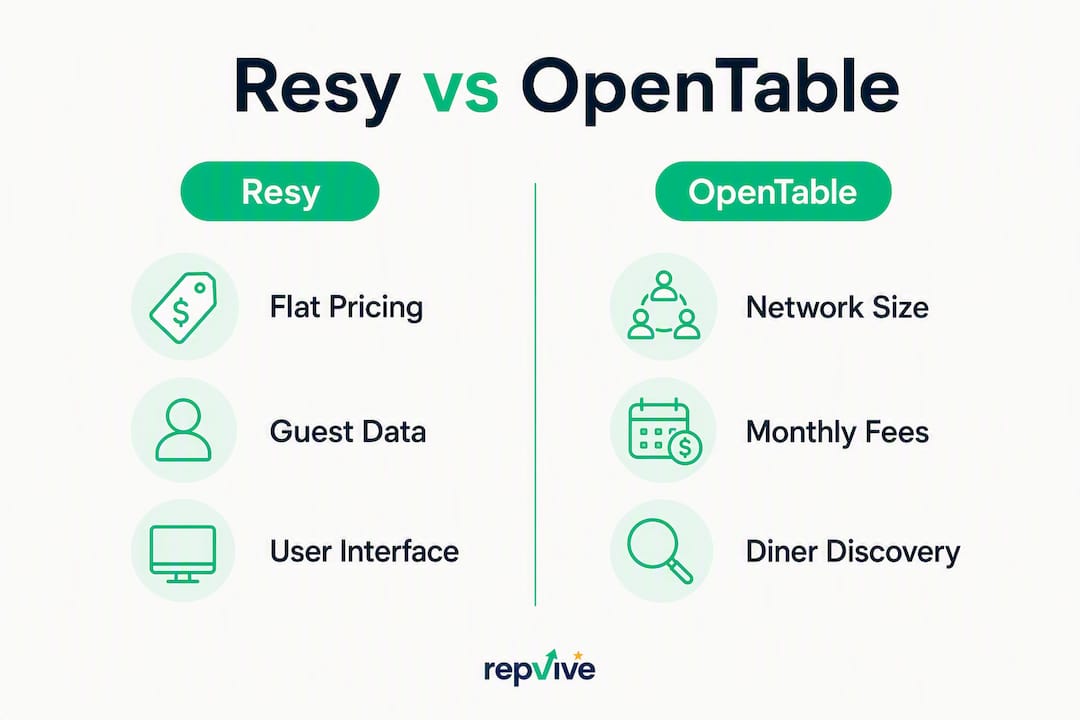
Choose the platform that matches your reputation priorities. If you need maximum diner discovery and a simpler staff-facing setup, OpenTable is the stronger starting point. If you need guest-data ownership, AmEx brand cachet, and flat-fee predictability, Resy is built for you. The Resy vs OpenTable decision isn’t just operational — it directly shapes who walks through your door, what they expect, and what they write about you afterward.
| Dimension | OpenTable | Resy |
|---|---|---|
| Best for | Newer restaurants needing discovery | Established fine-dining, major metros |
| Pricing model | — | $249–$899/mo flat, no per-cover fees |
| Diner network | 60,000+ restaurants worldwide | — |
| Guest data ownership | Platform retains data | Restaurant owns guest data |
| Card partnership | Visa Infinite perks | AmEx Global Dining Access |
| Review/feedback handling | Platform policy; no guaranteed removal | Platform policy; no guaranteed removal |
| Floor management UI | Functional, older interface | Modern, drag-and-drop |
Procurement checklist — ask every vendor these before signing:
- Who owns the guest data, and can you export it in full at any time?
- What is the contract length, and what are the exit-clause terms?
- How does the platform handle defamatory or fake reviews on your listing?
- Are per-cover fees capped, and what triggers them?
- What is the onboarding timeline, and how long will your listing be inactive during migration?
Migration from one platform to the other typically takes two to four weeks. During that window, your guest history and review-path continuity are at risk. Export your full guest list before you flip the switch — losing that data also loses the evidence trail that supports any future legal removal claim.
Pro Tip: If a review on either platform is defamatory or clearly fake, document everything before you contact the platform. Screenshots, timestamps, and guest records are the foundation of any attorney-led removal claim.
Table of Contents
- How each platform handles cancellations and no-shows
- Do these platforms actually prevent double bookings?
- What the user experience actually looks like
- When a platform won’t remove a damaging review, Repvive can
- Key Takeaways
- FAQ
How each platform handles cancellations and no-shows
Both platforms support card-on-file and deposit features, and no-show rates drop by roughly half when a restaurant requires a card on file. Resy publicly claims a 3% no-show rate. OpenTable lets you require deposits and set cancellation windows, but neither platform charges the fee automatically — you configure the policy, and enforcement is on you. A missed no-show fee is also a missed opportunity to prevent the frustrated “I couldn’t get my deposit back” review.

Do these platforms actually prevent double bookings?
Both systems manage real-time availability and block seats as reservations are confirmed, which eliminates most double-booking risk. The gap shows up at integration points: if your POS and reservation system aren’t synced, a walk-in seated manually can create a conflict the platform never sees. Resy’s more modern UI makes manual overrides easier to spot on a busy floor. OpenTable’s offline mode keeps you in service when connectivity drops, which matters in venues with unreliable Wi-Fi.
What the user experience actually looks like
For restaurant staff, Resy’s drag-and-drop floor plan is faster to learn and easier to use mid-service. OpenTable’s interface is functional but older, and mobile app stability is a real differentiator on high-volume nights. For diners, OpenTable’s larger network means more discovery traffic — it leads in 13 of 15 top U.S. cities. Resy dominates Brooklyn and is growing fast in Miami and Los Angeles. A slow or crashed floor system on a Saturday night is a direct path to negative reviews — staff UX is a reputation issue, not just an operational one.
When a platform won’t remove a damaging review, Repvive can
Neither Resy nor OpenTable guarantees review removal. When a defamatory or fake review persists on your listing or a connected aggregator, the platform typically requires legal-style evidence or defers to its published policy.
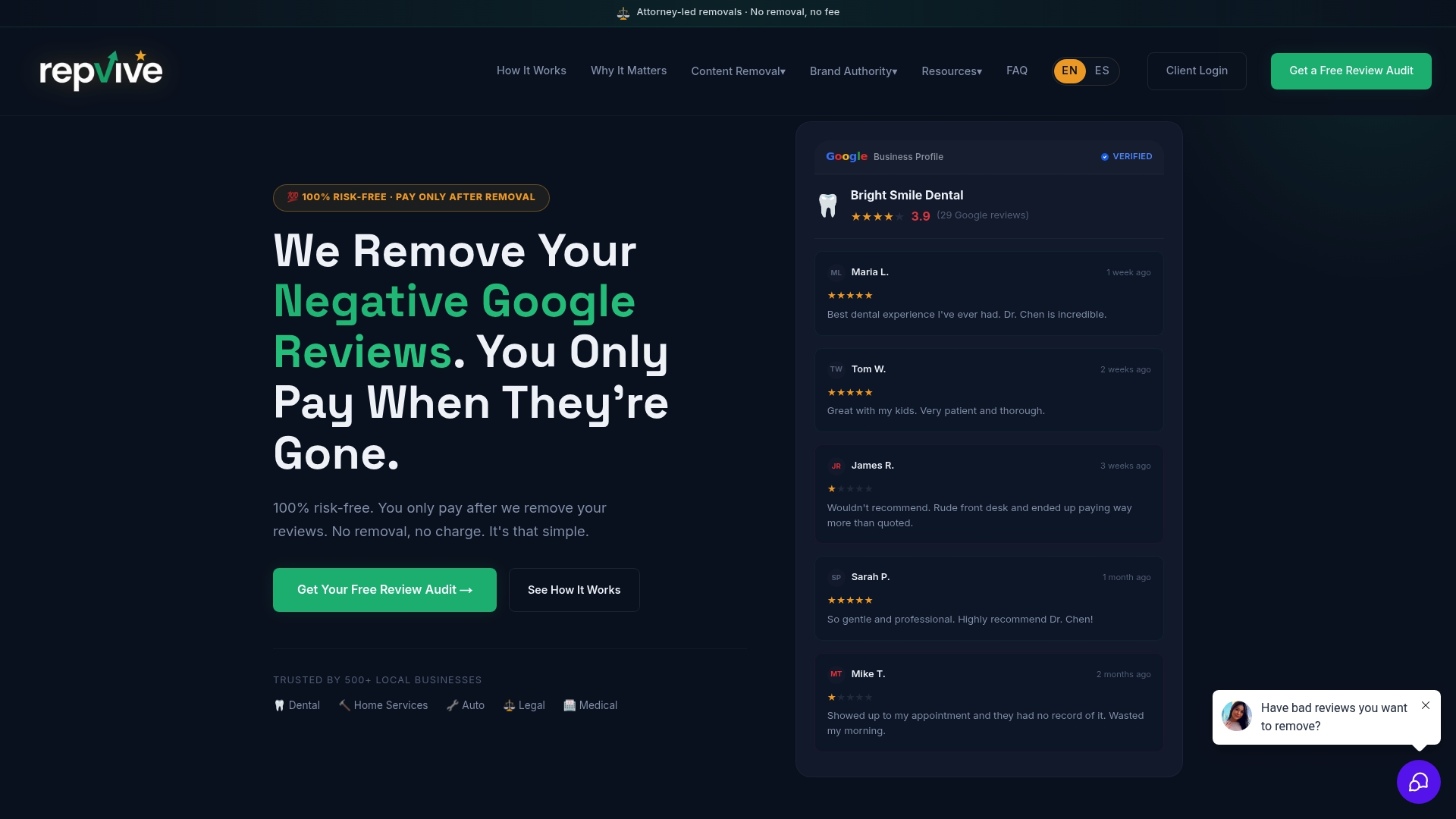
Repvive’s attorney-led service fills that gap. There are no upfront fees — you pay only after a review is successfully removed. The legal team builds a customized claim for each review, works through direct channels to Google and other platforms, and gives you a real-time tracking dashboard so you always know where your case stands. For restaurant owners mid-migration, Repvive also helps you flag high-risk reviewer accounts and preserve the evidence you’ll need before you lose access to your old platform’s guest records.
Start with a free Google Business Profile audit to see exactly what’s on your listing right now, then connect with the team about review removal if anything needs to go.
Pro Tip: Escalate to attorney-led removal the moment a platform denies your first removal request — waiting erodes your legal options and lets the review accumulate more visibility.
Key Takeaways
Resy wins on guest-data ownership and flat-fee pricing; OpenTable wins on diner network size — your reputation priorities should drive the choice, not the monthly fee alone.
| Point | Details |
|---|---|
| Pricing model matters at volume | Resy’s flat $249–$899/mo avoids per-cover fees; OpenTable adds $1.00–$2.50 per network cover. |
| Guest data ownership | Resy lets restaurants own and export guest data; OpenTable retains it within the platform. |
| Network reach vs. brand cachet | OpenTable leads in 13 of 15 top U.S. cities; Resy dominates premium metro fine-dining scenes. |
| No-show policy is your responsibility | Both platforms support card-on-file holds, but you must configure and enforce the policy yourself. |
| Repvive for persistent reviews | When platforms deny removal, Repvive’s pay-per-removal attorney service removes defamatory reviews with no upfront cost. |
FAQ
Which is cheaper, Resy or OpenTable?
Resy uses flat monthly pricing ($249–$899/mo) with no per-cover fees, while OpenTable charges a monthly subscription plus $1.00–$2.50 per network cover — making Resy cheaper for high-volume restaurants.
Does Resy or OpenTable own my guest data?
Resy gives restaurants ownership and full export rights over guest data. OpenTable retains guest data within its platform, which limits your ability to use it independently.
Can either platform remove a fake or defamatory review?
Neither Resy nor OpenTable guarantees review removal. Both defer to their published policies, and defamatory reviews typically require legal-style evidence — which is where an attorney-led service like Repvive becomes the practical next step.
Which platform is better for a new restaurant?
OpenTable’s larger diner network, with 60,000+ restaurants and broader discovery traffic, gives newer restaurants without an established following more immediate booking volume.
How long does migrating between platforms take?
A typical migration runs two to four weeks. Export your full guest list and preserve all message records before switching — that data is also your evidence base for any future review removal claim.